

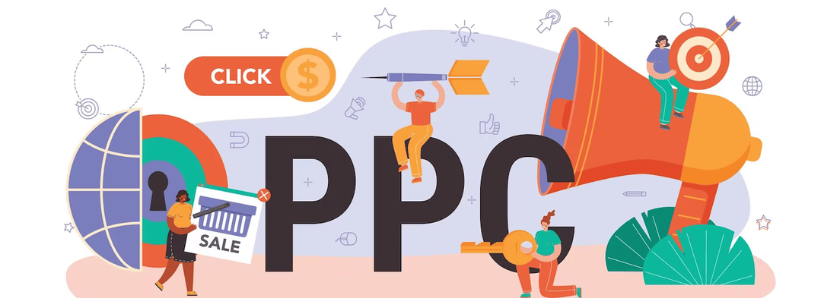
In the pay-per-click (PPC) model of Internet marketing, advertisers are charged a fee each time one of their ads is clicked. Simply put, you only pay for advertising when your ad is clicked on. It is simply a means of ‘buying’ visits to your website in addition to driving organic internet traffic.
Search engine advertising, which allows advertisers to pay for ad placement in a search engine’s sponsored links, is one of the most common types of PPC. When someone searches for a keyword relating to their business offering, this works. For example, if we bid on the keyword ‘Google Shopping Management,’ our ad may appear near the top of the Google search results page.
This is perfect for small businesses since you can pick how much you’re willing to spend on each keyword, allowing you to limit how much you’ll spend when your advertisements appear.
What Exactly Is PPC?
If you work in marketing or advertising, knowing ‘What is PPC?’ can help you. PPC advertising is a sort of digital advertising in which an advertiser pays a fee each time a user clicks on one of their advertisements, increasing organic traffic on the website.
The purpose is to elicit a specific type of user action, such as registration or product purchase. In each of your ad campaigns, you can employ a variety of keywords. Potential clients may be able to see those things or services as a result of this. A PPC ad may be seen by multiple users, but the advertiser is charged when internet users click on the Ad.
How Does Pay Per Click (PPC) Work?
PPC is a unique combination of marketing and advertising. Pay-per-click marketing is focused on generating leads and closing deals. After you’ve exhausted all organic lead generation options, the next obvious step is to launch a strategic PPC marketing campaign. If you’re wondering how pay-per-click works for you, read on. There are unique benefits:
- PPC marketing increases the visibility and traffic to your website.
- PPC marketing programs are built on the most relevant keywords. Their well-organized network allows them to be extremely effective.
- PPC is highly action-oriented and concentrated. Developing an organic presence takes time. PPC marketing produces faster returns than organic traffic generation.
- PPC allows you to reach out to those who are unfamiliar with your brand. PPC marketing expands your reach and consequently your possible response opportunities.
Why Is PPC Playing an Important Role in Digital Marketing?
PPC is one of the most effective tactics for internet advertising and improving a company’s online presence. In terms of business operations and growth, the following are the most significant aspects of PPC:
It is reasonably priced.
You can control your budget, targeting, and ad placements with an effective PPC campaign. Because you only pay when someone views your website, it may be an excellent value for money. You can invest in these initiatives based on your company’s marketing goals and budget.
It produces a lot of traffic.
PPC is still useful for targeting specific traffic. You may target your audience by region, language, keywords, time, date, and even device type. You can also use ad re-targeting, which shows your advertisement to those who have previously shown interest in it.
It contributes to the social media strategy.
You may use an integrated PPC campaign across web search results and social media to convert more customers. A combined search and social PPC campaign can reduce cost per acquisition while converting much more customers than standalone PPC initiatives. This is due to the possibility of receiving more cross-channel customer data. Cross-channel customer data can help you improve your ads even more.
It generates good leads.
PPC is an efficient way for any website or business to create online leads. It is critical to create your adverts at the appropriate moment. This can boost the number of clicks and encourage customers to buy a product or service.
It aids SEO strategy.
PPC helps you to test your keywords before adding them to a large-scale SEO strategy. Although increasing organic keyword conversion rates may be difficult, you can use PPC keyword data to influence your organic search market strategy. By discovering the keywords that convert to paid adverts, you can better tailor a website’s metadata and headlines with the top keywords.
It does not necessitate the use of algorithms.
It is not always possible for PPC algorithms to have a substantial impact on generating organic traffic. You are free to take your time considering the campaign objectives and forecasting the outcomes. You pay to have the advertisement appear in web search results and then pay for clicks.
It provides tiers of targeting possibilities.
A PPC advertising campaign may give you the necessary analytics. Age, gender, region, and other interests may be used to target clients both locally and globally. Using PPC advertising solutions, you may schedule campaign delivery at specific hours, locations, and demographics.
More Information: